Modern public ledgers usually miss the mark when it comes to serving actual national networks. Most activities are loud, speculative, and cramped into a few wealthy Western hubs. Meanwhile, billions of citizens across Asia, Africa, and the Middle East deal with broken legacy setups where daily transactions feel like pulling teeth. To fix this mess, the Abu Dhabi-based ADI Foundation has introduced a system designed for sovereign infrastructure. We think this setup might finally make public networks usable for major financial and administrative services.
ADI Foundation platform runs as an EVM-compatible Layer-2 rollup secured by Ethereum L1. By combining zkOS and Airbender stacks, the system handles heavy computing off-chain and posts zero-knowledge validity proofs to ensure security. Honestly, it is not just another token playground. Instead, it is built to run Dirham-backed stablecoins, national identity registers, and cross-border payments with built-in policy rules that satisfy local regulators. The team plans to onboard one billion users by 2030.
Today, we want to examine the technological foundation making this scale possible, from the specialized RISC-V proof pipelines to the custom resource calculations.
Build on Next-Generation Blockchain Infrastructure
Let’s create blockchain products designed for scale, compliance, and real-world adoption
Table of contents:
- Sovereign Partnerships and Regional Growth Objectives of the ADI Chain
- Mainnet and Testnet Technical Network Configurations of the ADI Chain
- Multi-Layered Architecture and Sovereign Scaling Solutions of the ADI Chain
- Execution Layer Architecture and Resource Accounting of the ADI Chain
- Airbender Proof Pipeline and Proving Infrastructure of the ADI Chain
- Canonical Bridging Mechanics and Asset Backing Security of the ADI Chain
- Ecosystem Economics and Native Token Utility of the ADI Chain
- Maximal Extractable Value Defense Systems of the ADI Chain
- Conclusion
Sovereign Partnerships and Regional Growth Objectives of the ADI Chain
The ADI Foundation is based in Abu Dhabi and acts as the governing body for the network. It was founded by Sirius International Holding, which is the digital arm of the International Holding Company. This parent holding company manages a portfolio valued at 240 billion dollars, providing substantial institutional backing. This backing helps the network build frameworks and trust architecture acceptable to sovereign institutions and central banks.
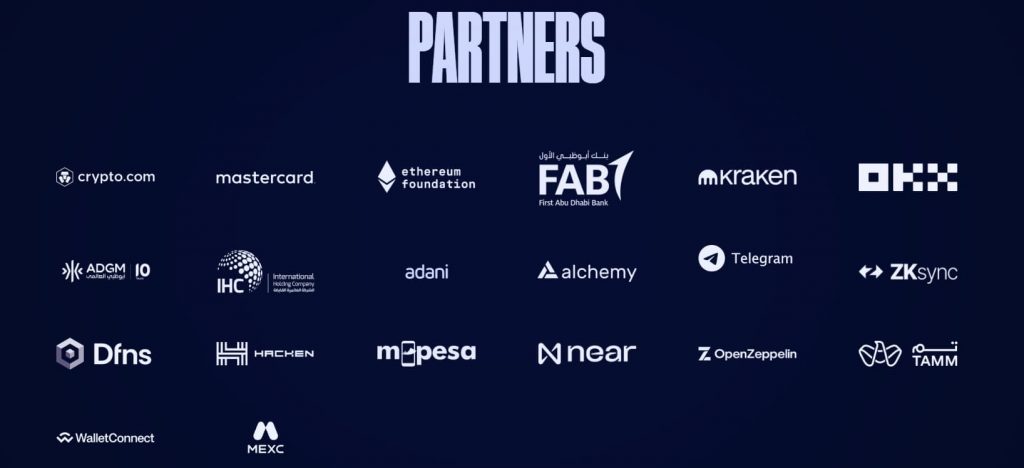
A major initiative is building the infrastructure for a regulated stablecoin pegged to the United Arab Emirates Dirham. This stablecoin is designed to meet strict regulatory compliance standards, offering immediate settlement on-chain 24 hours a day. The long-term goal of the foundation is to bring one billion users on-chain in emerging markets across the Middle East, Africa, and Asia by 2030. These regions represent about 75% of the global population, yet they remain underserved by legacy banking infrastructure.
ADI addresses these challenges by offering a neutral settlement layer that connects:
- Payment systems
- Identity registries
- Healthcare databases
- Logistics networks
This allows institutions to link systems across borders while maintaining policy compliance through modular compliance L3 domains. This sovereign linkage is expected to attract substantial capital from institutions onto public blockchain rails.
Mainnet and Testnet Technical Network Configurations of the ADI Chain
To deploy software on ADI, you must configure your local wallets and deployment environments to connect with the target environment. The production network operates as an EVM-compatible layer that settles state updates onto the Ethereum mainnet. Setting up these connections is dead simple. You can access the RPC endpoints directly or route their traffic through third-party services like Alchemy to manage connection limits. The technical network specifications are organized below:
| Network Name | ADI Network | ADI Network AB Testnet |
| RPC URL | https://rpc.adifoundation.ai/ | https://rpc.ab.testnet.adifoundation.ai/ |
| Chain ID | 36900 | 99999 |
| Currency Symbol | ADI | ADI |
| Block Explorer URL | https://explorer.adifoundation.ai/ | https://explorer.ab.testnet.adifoundation.ai/ |
| Alt Explorer URL | https://explorer-bls.adifoundation.ai/ | Not Available |
| L1 Token Contract | 0x8b1484d57abbe239bb280661377363b03c89caea | https://sepolia.etherscan.io/token/ 0x2a98b46fe31ba8be05ef1ce3d36e1f80db04190d |
These environments do not currently support ERC-7702 or ERC-4844 transactions. Standard debugging methods like the debug_traceCall RPC endpoint with custom tracers will fail on the network. Still, the testnet includes an active faucet that provides testnet ADI tokens, allowing you to transfer assets from Ethereum Sepolia using the canonical bridge interface.
Develop Enterprise-Ready Web3 Products
From stablecoins to digital identity systems, we help organizations turn blockchain concepts into reality
Multi-Layered Architecture and Sovereign Scaling Solutions of the ADI Chain
ADI Chain is structured as a modular Layer-2 rollup that settles proofs to Ethereum L1 and derives security from Ethereum-based verification. This layered security pattern extends beyond L2. By using the ZKsync zkOS and Airbender stacks, ADI allows governments, public institutions, and large enterprises to deploy dedicated Layer-3 networks directly on top of the ADI L2 ledger. This approach is highly practical. It isolates execution environments while maintaining cryptographic verification channels back to Ethereum.
Each Layer-3 network operates as an isolated execution domain running its own sequencer and proving infrastructure. These networks maintain connection to the rest of the ecosystem through a specialized Diamond Proxy contract. This proxy setup allows modular upgrades without risking the entire state of the rollup. Specifically, individual execution, administrative, and data verification modules can be replaced independently.
To protect against the execution of malicious batches, L3 chains apply a Validator Timelock. This security mechanism introduces a deliberate delay between the commitment of a transaction batch and its execution. Validators and automated systems get ample time to discover abnormalities.
| Propagation Phase | Action Performed | Finality State | Typical Duration |
| L3 Block Inclusion | Transaction included in L3 block by the sequencer | Soft confirmation | Seconds |
| L3 Batch Commit | Sequencer commits the L3 block batch to ADI L2 | L2 confirmation | Minutes |
| L3 Batch Execution | Prover submits validity proof to L2; state updates | L2 finality | Minutes |
| L2 Batch Settlement | L2 batch proved and executed on Ethereum L1 | L1 finality | Around 1 Hour |
The time required for complete cryptographic finality reflects this multi-layered verification structure:
- A transaction initially achieves soft confirmation on the Layer-3 chain within seconds.
- After the sequencer packages these transactions, the batch is committed to the L2 layer.
- Once the Airbender proving system verifies the execution correctness, the state transitions finalize on L2.
- The final step occurs when the L2 batch itself is proved and submitted to Ethereum L1, completing the chain of custody.
This layered approach gives developers a mix of instant usability and mathematical security.
Execution Layer Architecture and Resource Accounting of the ADI Chain
The execution layer of ADI Network represents the system implementation of the state transition function. The program is written in Rust and compiles to two distinct targets depending on the operational environment:
- The first compilation target is standard x86, which runs within the sequencer to handle transactions in forward-running mode. In this mode, the system uses standard operating system memory allocators and reads block data through a Rust-based oracle implementation, skipping Merkle proof verifications to maximize speed.
- The second target is RISC-V, which runs inside the Airbender prover during proof generation. Because this environment has no standard operating system, memory management is handled manually, and all inputs must be fully deterministic and provable.
Three primary programs handle transaction execution within this layer:
- First, the bootloader acts as the entry point program, initializing the virtual machine and routing incoming transactions.
- Second, execution environment interpreters process compiled bytecode and resource constraints.
- Third, the system program provides an abstract interface for storage reads, events, and oracle communication.
Because verifying transactions in zero-knowledge requires significant computational work off-chain, ADI Network employs a double-resource accounting model. This model tracks both an execution environment resource, known as Ergs, and a native resource representing proving costs. Ergs match standard EVM gas, allowing Ethereum-compatible smart contracts to run on the same fee schedule as Ethereum. The native resource measures the off-chain proving workload, which is dominated by the number of RISC-V processor cycles needed to prove the transaction.
If a transaction runs out of native resources, the execution halts and reverts. To keep standard Web3 wallets compatible without introducing new transaction formats, the network derives the native resource limit directly from the gas limit and transaction fees.
Airbender Proof Pipeline and Proving Infrastructure of the ADI Chain
The Airbender proof system is an execution-proving framework built on optimized STARK and FRI implementations. It is designed to prove the execution of RISC-V 32I+M instructions using Arithmetic Intermediate Representation constraints. This execution proof uses the Mersenne31 prime field and relies on Blake2s and Blake3 hash functions for trace commitments.
The proving process runs through a 6-stage pipeline:
- Witness generation begins the pipeline by computing low-degree extensions and creating trace commitments.
- Next, lookup and memory arguments verify the consistency of memory operations across execution frames.
- The primary STARK quotient polynomial is then calculated to prove circuit constraint satisfaction.
- During the fourth stage, DEEP polynomial batching reduces proof size and verification complexity.
- The pipeline then generates the interactive oracle proof of proximity.
- Finally, a SNARK wrapper converts this proof into a small FFLONK proof verified directly on Ethereum.
Proving execution traces requires specialized hardware. The performance characteristics of the prover scale based on GPU memory and parallel processing power:
| Hardware Spec | GPU Memory | GPU Model | FRI Provers | SNARK Provers | Target Throughput |
| Standard Setup | 70 GB | NVIDIA H100 | 1 | 1 (uses 33 GB) | ~15 TPS |
| Performance Setup | 140 GB | NVIDIA H200 | 2 (Parallel) | 1 (Dedicated) | ~20 TPS |
Running FRI and SNARK provers in parallel on separate partitions improves total transaction throughput by 15-20%. Because different organizations have different security and operational requirements, ADI supports three separate infrastructure deployment models:
- Turnkey Managed Model. ADI runs the entire stack, managing the sequencer, the GPU proving hardware, and the governance keys on behalf of the client. This is best for teams wanting low operational overhead.
- Client-Operated Model. The client runs their own sequencer nodes, operates their own GPU proving hardware, and maintains full custody of all operational keys. This is ideal for regulated organizations requiring total control.
- Split Responsibility Model. The client manages governance and keeps control of the key configurations, while ADI manages day-to-day operation of the sequencer or prover infrastructure.
These choices allow organizations to balance sovereign compliance with operational complexity.
Request a Blockchain Architecture Consultation
Get expert guidance on rollups, interoperability, tokenization, and secure smart contract development
Canonical Bridging Mechanics and Asset Backing Security of the ADI Chain
The canonical bridge connects Ethereum L1, ADI L2, and any associated L3 chains. Deposits begin on Ethereum, where users authorize the bridge contract to spend their tokens. The Bridgehub coordinates the transaction, routing the assets through the L1 Asset Router to the L1 Native Token Vault. This vault locks the assets using secure transfer methods and increments the tracking balance for that specific chain. The Bridgehub then requests an L2 priority transaction from the Mailbox contract. Once the message is received on L2, the bootloader mints the equivalent L2 balance.
| Bridge Step | Contract Involved | Action | Gas Token Required |
| 1. Approve | L1 ERC20 Token Contract | User authorizes bridge to spend tokens | ETH |
| 2. Deposit Request | Bridgehub | Initiates deposit flow for gas or asset | ETH |
| 3. Route | L1 Asset Router | Directs tokens to the appropriate handler | ETH |
| 4. Lock | L1 Native Token Vault | Secures assets and updates chain balance | ETH |
| 5. Priority Request | Mailbox | Emits transaction request to L2 sequencer | ETH |
| 6. Mint | L2 Bootloader | Mints native ADI balance on L2 | ADI |
The bridge uses two primary functions for incoming transactions. Single token deposits go through requestL2TransactionDirect, while complex transactions use requestL2TransactionTwoBridges. The latter is used for standard ERC20 deposits, where one bridge locks ADI to pay for gas while the other bridge secures the asset being deposited.
Security is maintained through strict cryptographic rules. Every withdrawal from L2 back to L1 must be backed by a zero-knowledge validity proof verified directly on the Ethereum mainnet. No trusted operators, multisig groups, or external oracles can bypass this step. To prevent double-claiming, the L1 Nullifier contract checks withdrawal status using a triple-nested mapping: isWithdrawalFinalized[chainId][batchNumber][messageIndex].
Once this value is set to true, the transaction is finalized, and the same proof can never be resubmitted. The bridge maintains a strict 1:1 asset backing. The L1 Native Token Vault tracks balances via chainBalance[chainId][assetId], ensuring that total assets withdrawn on L1 never exceed the assets originally deposited. Address aliasing protects against smart contract exploit vectors. Specifically, L1 contract addresses are offset on L2 by 0x1111111111111111111111111111111111111111 to prevent malicious L1 contracts from spoofing L2 messages. All bridged tokens are deployed deterministically using CREATE2, allowing developers to calculate contract addresses before sending any funds.
Ecosystem Economics and Native Token Utility of the ADI Chain
The ADI token is the central utility asset of the network. By using the custom gas token capability of the ZK Stack, ADI serves as the native gas token for all transactions on the ADI L2 chain and its L3 networks. This approach is highly efficient because it removes the need for developers and users to manage separate ETH balances. Beyond transaction fees, ADI acts as the primary settlement currency for payments between developers, validation nodes, and enterprises.
The tokenomics are structured to support long-term value preservation. Unlike highly inflationary networks, ADI uses a treasury-backed pool to fund staking rewards, avoiding any new token minting. The genesis supply is capped at 999,999,999 tokens. The allocation and lockup schedules are organized below:
| Allocation | Size Percentage | Vesting Period | Cliff Duration | TGE Unlock |
| Community Fund | 35% | 72 months | None | 1.39% |
| Treasury Reserves | 25% | 108 months | None | 5.00% |
| Private Investors | 12% | 72 months | 12 months | None |
| Partnerships | 10% | 72 months | 12 months | None |
| Team | 10% | 72 months | 12 months | None |
| Incentivization Pool | 4% | None | None | 100.00% |
| Liquidity | 4% | None | None | 100.00% |
According to our analysts, this extended vesting cycle ensures aligned incentives across institutional and developer stakeholders. During the first year of operations, locked tokens are released on a monthly schedule occurring on the ninth day of each month.
Maximal Extractable Value Defense Systems of the ADI Chain
Maximal Extractable Value, commonly called MEV, presents a severe challenge for standard decentralized applications. When a user submits a transaction on a traditional blockchain, it enters a public mempool where automated bots can inspect its details. These bots often front-run or sandwich large orders, forcing the user to accept high slippage and worse execution prices.
To address this, ADI employs a private transaction pool. Transactions sent to the sequencer are hidden from public searchers, blocking mempool scanning entirely. Honestly, this setup is fantastic for institutional execution. It prevents bots from executing front-running, sandwich, or arbitrage attacks before the block is built. Still, this private mempool cannot prevent economic MEV that arises from protocol liquidations or the specific structure of decentralized exchange pools.
Because this protection is native to ADI, transactions that exit the network to interact with Ethereum or other public chains remain exposed to standard MEV risks. To mitigate this exposure, the upcoming ADI wallet will include transaction routing powered by OneInch, protecting swaps when users interact with the wider Ethereum ecosystem.
Conclusion
The technical design of ADI successfully addresses the primary objections that have prevented governments and financial institutions from adopting public blockchain technology. By using modular L3 Rollups with Validator Timelocks, sovereign entities can control their policy compliance without separating themselves from the security of Ethereum L1. The double-resource accounting model ensures that verifying proofs remains cost-effective, while the private mempool design secures transactions against predatory MEV bots.
This combination of sovereign compliance and high-performance execution positions ADI as a top tool for the next wave of global financial development.
Turn Blockchain Infrastructure Into Business Value
Work with IdeaSoft to develop applications that leverage modern Layer-2 and cross-chain technologies